
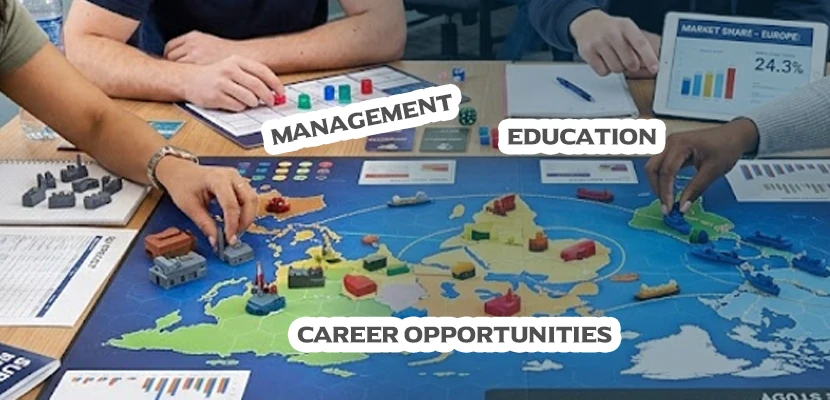
PGDM-Focused Pages: A Complete Guide to Management Education and Career Opportunities
In today’s competitive business environment, choosing the right management programme can influence the direction of a student’s professional journey. With businesses increasingly combining traditional management practices with technology, analytics, digital transformation, and innovation, students need education that goes beyond theoretical concepts.
This is where PGDM-focused programmes can play an important role.
A Post Graduate Diploma in Management (PGDM) can help graduates develop knowledge of business functions while building practical skills in leadership, communication, analytics, problem-solving, and decision-making. For students exploring management education in Mumbai, understanding the different PGDM-focused options can make the process of choosing a programme much easier.
What Is a PGDM?
PGDM stands for Post Graduate Diploma in Management. It is a postgraduate management programme designed to develop business and managerial capabilities.
A typical PGDM curriculum may cover areas such as:
- Marketing
- Finance
- Human Resources
- Operations
- Business Strategy
- Business Analytics
- Organizational Behaviour
- Entrepreneurship
- Digital Business
- Business Communication
The exact structure varies between institutions.
Unlike simply focusing on examinations, many contemporary PGDM programmes incorporate case studies, internships, live projects, simulations, presentations, industry interactions, and skill-based learning.
This practical orientation can help students understand how management concepts are applied in actual business situations.
Why PGDM Is Relevant in Today’s Business World
The workplace has changed significantly.
Companies today use artificial intelligence, analytics, automation, cloud platforms, digital marketing, and technology-enabled business models across multiple functions.
As a result, future managers need a combination of business understanding and technological awareness.
A modern PGDM can provide students with an opportunity to develop both. Instead of learning management in isolation, students can explore how finance, marketing, operations, people, technology, and strategy work together.
For students considering a management career, this integrated perspective can be particularly valuable.
PGDM Course in Mumbai
Mumbai is an attractive destination for management education because of its diverse business ecosystem.
The city has organizations operating across:
- Banking and financial services
- Consulting
- Technology
- Retail
- Manufacturing
- Media
- Entertainment
- E-commerce
- Real estate
- Startups
This environment can provide management students with opportunities for industry interaction, internships, networking, and exposure to different business models.
Aditya School of Business Management (ASBM) is one institution in Mumbai offering postgraduate management education, including its PGDM+ programme. The institute describes its approach as industry-oriented, with practical learning, specialization opportunities, internships, case studies, simulations, and corporate interaction.
PGDM+ for Broad Management Exposure
A broad PGDM programme can be useful for students who want to understand multiple areas of business before committing themselves to a specific career direction.
ASBM’s PGDM+ programme is structured as a two-year full-time postgraduate programme and includes management areas such as finance, marketing, human resources, operations, IT, and business analytics.
The programme also provides opportunities for students to develop additional professional capabilities through practical and experiential learning.
This kind of broad management education can be useful for graduates who are interested in corporate careers, entrepreneurship, consulting, sales, business development, and management roles.
PGDM in Business Analytics
One of the most important developments in management education is the growing importance of data.
Businesses collect information from customers, transactions, operations, websites, social media, financial systems, and other sources. The challenge is turning this information into useful business decisions.
A PGDM in Business Analytics brings management and data-driven decision-making together.
ASBM offers a dedicated PGDM in Business Analytics designed around areas such as business analytics, data analysis, technology, and management.
Students interested in this pathway may explore careers such as:
- Business Analyst
- Data Analyst
- Business Intelligence Analyst
- Marketing Analyst
- Operations Analyst
- Risk Analyst
- Analytics Consultant
- Strategy Analyst
This programme can be particularly relevant for graduates who enjoy combining business problems with analytical and technological solutions.
Learning Through Case Studies
Management cannot be learned entirely from textbooks.
Consider a company that is experiencing declining sales. Students may be asked to determine whether the problem is related to pricing, competition, customer behaviour, marketing, product quality, or distribution.
There may be several possible solutions.
Case-based learning allows students to examine such situations, analyse information, discuss alternatives, and justify their recommendations.
This can help develop critical thinking and business decision-making skills.
The Importance of Live Projects and Internships
The transition from college to the workplace can be challenging.
Internships and live projects can provide students with opportunities to experience professional environments before graduation.
Through these experiences, students can learn about:
- Workplace communication
- Team collaboration
- Deadlines
- Client requirements
- Business processes
- Problem-solving
- Professional responsibility
ASBM highlights internships and live projects as part of its experiential learning approach.
Such opportunities can also help students understand which industries and roles match their interests.
Industry Interaction and Corporate Exposure
Interaction with business professionals can add another dimension to management education.
Guest lectures, seminars, corporate sessions, industry visits, conferences, and professional events can expose students to current business practices.
Students may gain insights into topics that are difficult to understand fully through classroom learning alone, such as leadership challenges, changing consumer behaviour, digital transformation, workplace culture, and industry expectations.
For aspiring managers, these interactions can also provide opportunities to develop professional networks.
Dual Specialization and Career Flexibility
Management careers are becoming increasingly interdisciplinary.
For example, marketing professionals may use analytics, finance teams may rely on technology, HR departments may use workforce analytics, and operations teams may depend on digital systems.
This makes knowledge across multiple areas valuable.
ASBM’s PGDM programme provides opportunities for dual specialization, depending on the programme structure. Students can explore combinations across areas such as Finance, Marketing, Operations, HR, IT, and AI & Data Science.
Developing complementary skills can help students understand how different business functions connect.
Developing Future-Ready Management Skills
A successful management professional needs more than subject knowledge.
Important skills include:
Communication
Managers need to communicate ideas clearly with colleagues, clients, and senior leadership.
Analytical Thinking
Professionals increasingly need to interpret information and make evidence-based decisions.
Leadership
Managers must coordinate teams, motivate employees, resolve conflicts, and take responsibility for outcomes.
Adaptability
Business environments can change quickly, requiring professionals to learn new technologies and approaches.
Problem-Solving
Organizations value individuals who can identify challenges and develop practical solutions.
A well-designed PGDM programme can provide opportunities to develop these abilities through presentations, projects, simulations, group work, internships, and industry interactions.
Career Opportunities After PGDM
The versatility of management education allows graduates to explore multiple career paths.
Marketing
Graduates can pursue careers in brand management, digital marketing, sales, market research, and business development.
Finance
Career opportunities can include financial analysis, corporate finance, banking, investment research, risk management, and financial services.
Human Resources
Students can explore recruitment, talent management, employee engagement, learning and development, and HR analytics.
Operations
Career options include supply-chain management, logistics, procurement, process improvement, and operations management.
Business Analytics
Graduates can pursue business analyst, data analyst, BI, risk analytics, and strategy-oriented positions.
Consulting
Students with strong analytical and communication skills can explore management, strategy, operations, and business consulting.
Entrepreneurship
PGDM graduates can also use their knowledge to launch businesses, join startups, or contribute to family enterprises.
PGDM and the Future of Management
The future manager will increasingly need to understand both people and technology.
Artificial intelligence may automate certain tasks, but organizations will still require professionals who can define problems, interpret information, make strategic decisions, communicate effectively, and lead teams.
This makes the combination of management education and emerging skills particularly important.
PGDM programmes that incorporate analytics, digital business, AI, practical projects, internships, and industry exposure can help students prepare for this changing environment.
How to Choose the Right PGDM Programme
Students should not choose a PGDM solely because of its name.
Before applying, consider:
Curriculum: Does it include current business and technology trends?
Specializations: Does it offer the area you want to pursue?
Practical Exposure: Are there internships, projects, case studies, and simulations?
Industry Interaction: Can students interact with business professionals?
Faculty: Do faculty members have relevant academic and industry experience?
Career Support: Does the institution provide placement preparation and career guidance?
Infrastructure: Are appropriate facilities available for modern management learning?
Recognition and Approvals: Are the programme’s applicable regulatory approvals and details clearly available?
Return on Investment: Do the programme’s costs make sense for your career objectives?
Why PGDM-Focused Education Can Be a Smart Career Step
The real strength of management education lies in its ability to connect different areas of business.
A student can learn how marketing influences sales, how finance affects strategy, how HR influences organizational performance, how operations affects customer satisfaction, and how analytics can support decisions across all these functions.
This interconnected understanding is one reason PGDM remains an attractive pathway for graduates interested in management.
For students considering PGDM-focused programmes in Mumbai, ASBM provides options ranging from broad management education through PGDM+ to specialized learning through its PGDM in Business Analytics.
Final Thoughts
A PGDM is more than a postgraduate qualification. It can be a platform for developing the skills required to navigate a complex and technology-driven business environment.
From marketing and finance to analytics, consulting, operations, HR, entrepreneurship, and strategy, PGDM graduates can explore diverse career directions.
The most important step is choosing a programme that aligns with your interests and long-term goals.
When evaluating PGDM-focused pages and programmes, look beyond the course title. Examine the curriculum, practical learning, faculty, industry exposure, specialization options, internships, career support, and opportunities to develop future-ready skills.
The right PGDM programme can help transform a graduate’s academic knowledge into practical business capability—and turn career ambitions into a structured professional journey.