
Prabandhan 2026
INTRODUCTION
Prabandhan 2026 was organised as an eleven-day orientation programme for the PGDM Batch 2026–28 at Aditya School of Business Management (ASBM). The programme was designed to provide students with a meaningful beginning to their management journey by exposing them to academics, industry, entrepreneurship, leadership, technology, communication, self-development, teamwork and the realities of the corporate world.
Rather than being limited to conventional introductory sessions, Prabandhan 2026 created a learning environment where students could listen, interact, question, participate, compete, analyse, collaborate and experience.
PRABANDHAN 2026
Orientation Programme PGDM Batch 2026–28
Aditya School of Business Management
The eleven days brought together senior institutional leaders, industry professionals, entrepreneurs, alumni, faculty members and students. Through a combination of expert sessions, case studies, movie-based learning, technical training, psychometric assessment, management games, student leadership orientation and an outbound adventure, the programme gradually helped the new batch understand what it means to be a management student and, eventually, a management professional.
Most importantly, the programme gave students an opportunity to get to know one another. What began as a group of students entering a new academic environment gradually developed into a batch that learned to communicate, trust, compete and work together.
DAY 1
INAUGURATION, LEADERSHIP & INDUSTRY EXPOSURE
Host: Prof. Sumana Ranjan
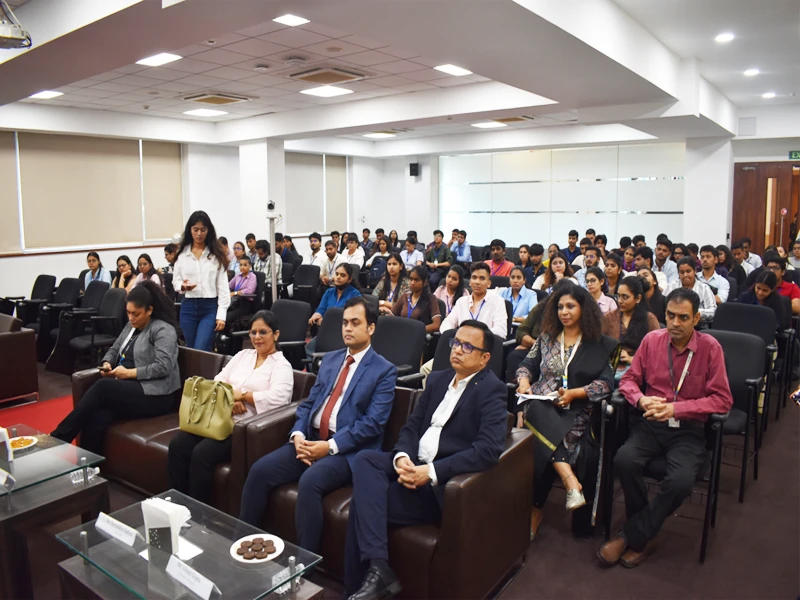
The first day of Prabandhan 2026 marked the formal beginning of the journey of the PGDM Batch 2026–28.
The programme commenced with the ceremonial lighting of the lamp, symbolising the beginning of a new chapter filled with knowledge, learning and opportunities. The lamp-lighting ceremony was followed by the formal addresses to the students.
The inaugural programme was graced by Strategic Advisor Mr. Rajan Saxena, Trustee Shri Aditya Mishra Sir, Dr. Balkrishna Parab, Dean & Director of AIMSR, and Dr. Suvrashis Sarkar, Director of ASBM, along with distinguished guests from the corporate and entrepreneurial world.
The four guests who were part of the inaugural ceremony included:
- Mr. Sharan Pillai, Founder of Oviaha AI
- Mr. S. Venkatesh, Head – Risk & Internal Control at Siemens India
- Ms. Pratika Saraswat, Director at Morgan Stanley
- Mr. Rajiv Vaishnav, Managing Partner at Cornerstone Ventures
Their presence gave students an early opportunity to connect their classroom journey with the wider professional world.
The speakers brought diverse experiences from artificial intelligence, marketing, enterprise risk management, technology, fintech, venture capital, entrepreneurship and leadership. Mr. Rajiv Vaishnav brought extensive experience in venture capital, enterprise technology and India’s startup ecosystem, while Mr. S. Venkatesh represented the field of enterprise risk management and internal controls. Mr. Sharan Pillai brought an entrepreneurial and AI-driven marketing perspective, and Ms. Pratika Saraswat represented the fields of product, technology, fintech and digital transformation.
Following the lamp-lighting, the dignitaries and guests addressed the students about management, leadership, professional development and the changing business environment.
The students received their first glimpse into the expectations of the professional world and the importance of developing themselves beyond academics.
The inaugural session was hosted by Prof. Sumana Ranjan, who guided the proceedings and ensured a smooth beginning to the orientation.
Learning from Day 1
Day 1 established the foundation of Prabandhan 2026. It reminded students that management education is not simply about obtaining a qualification. It is about developing the knowledge, attitude, leadership ability, adaptability and professional outlook required to succeed in a constantly changing world.
DAY 2
BUSINESS COMMUNICATION, INTERPERSONAL SKILLS & TEAM BUILDING
Hosts: Ms. Raksha Panchariya and Ms. Sheryl Ann Joseph
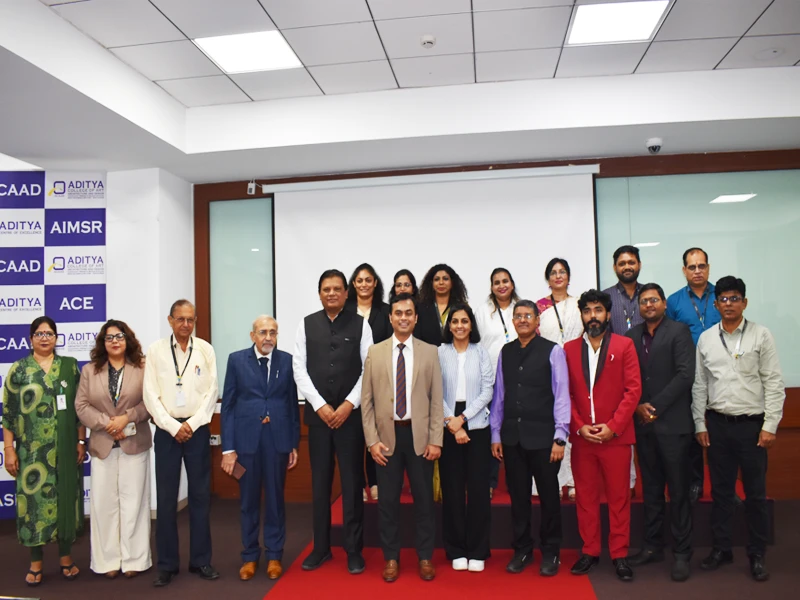
Students of PGDM Batch 2025–27
Day 2 focused on one of the most important aspects of management—communication and interpersonal skills.
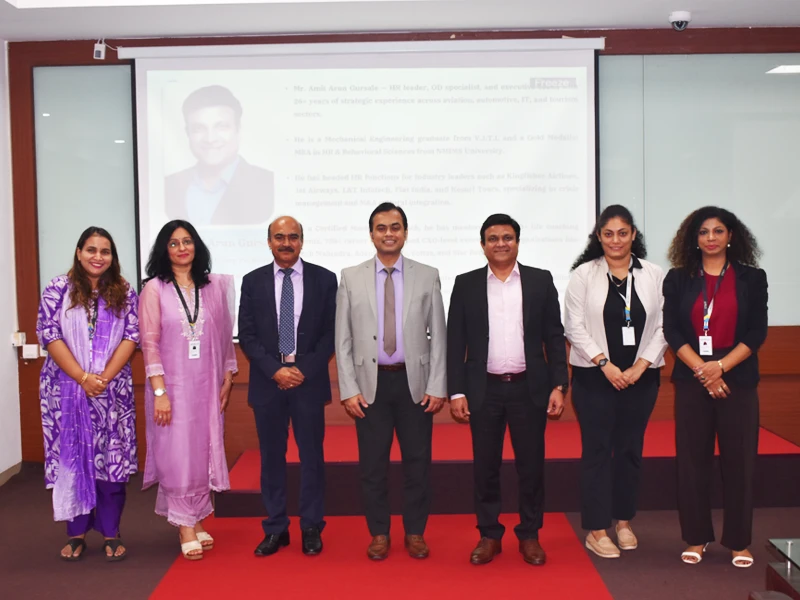
The guest sessions were based on the theme “Business Communication & Interpersonal Skills in the Age of AI.” The two distinguished speakers were Mr. Amit Arun Gursale and Shri Anil Hatekar.
Mr. Amit Arun Gursale is a career coach, behavioural trainer, assessor and HR professional with extensive experience across aviation, automotive, IT and tourism. He has also worked with organisations including Kingfisher Airlines, Jet Airways, L&T Infotech, Fiat India and Kesari Tours.
Shri Anil Hatekar, Treasurer at NDDB and Vice Chairman of the Indian Dairy Association, brought more than three decades of experience in the dairy cooperative sector. He has held leadership positions in cooperative development and has contributed to areas including sustainable dairy development, capacity building and institutional strengthening.
The sessions helped students appreciate that although technology and AI are transforming the workplace, human communication, interpersonal relationships and behavioural skills remain essential.
Ice-Breaking & Team-Building Activity
Following the guest speaker sessions, students participated in an engaging group activity involving a balloon and cups.
The students were divided into groups. One member at a time had to hit the balloon upward and ensure that it remained in the air. While the balloon was in the air, the group had to stack cups one above another. As the balloon came down, the students had to continue coordinating and complete the task.
The activity was simple, energetic and enjoyable, but it created a strong management lesson.
Students had to communicate quickly, coordinate their actions and understand that the performance of one member could affect the entire team.
The activity highlighted:
- Team Building
- Leadership
- Communication
- Time Management
- Coordination
- Trust
- Quick Decision-Making
It also served its purpose as an ice-breaker. Students who had just entered a new environment began interacting with one another in a relaxed and enjoyable manner.
Learning from Day 2
The activity made students realise that teamwork is not about one person doing everything. It is about every member understanding their role, supporting others and working towards one common goal.
DAY 3
FINTECH, ENTREPRENEURSHIP & THE DIGITAL ERA
Hosts: Ms. Tushita Suvarna and Ms. Aneri Bhatt
Day 3 introduced students to two rapidly evolving areas of modern business—FinTech and entrepreneurship in the digital era.
Session 1 – The Future of FinTech
The first session featured Mr. Vineet Gupta, Vice President at Ticker Data Limited, on the theme “The Future of FinTech: Emerging Trends and Career Opportunities.”
Mr. Gupta’s professional experience includes business development in the BFSI sector and earlier experience with Andhra Bank. His session helped students understand the growing role of technology in financial services and the career opportunities emerging from this transformation.
The session gave finance-oriented students an opportunity to look beyond traditional financial services and understand how technology, markets, data and finance are increasingly interconnected.
Session 2 – Entrepreneurship in the Digital Era
The second session featured Mr. Devak Gandhi, CEO & Founder of DIGIJAR.
As an entrepreneur and digital marketing strategist, Mr. Gandhi shared insights from his real-world experience of building and scaling businesses in the digital environment.
He brought more than a decade of industry experience and has worked with numerous brands while building DIGIJAR.
The session was highly interactive and insightful. Students were able to connect management concepts with actual entrepreneurial experiences.
The discussion encouraged students to think about:
- Innovation
- Risk-taking
- Entrepreneurship
- Digital transformation
- Brand building
- Resilience
- Adaptability
Learning from Day 3
The day helped students understand that the business world is changing rapidly and that future managers need to be comfortable with technology, innovation and entrepreneurial thinking.
DAY 4
CASE STUDIES, CRITICAL THINKING & STRATEGIC DECISION-MAKING
Hosts: Ms. Mitali Mhatre and Mr. Omkarkumar Gupta
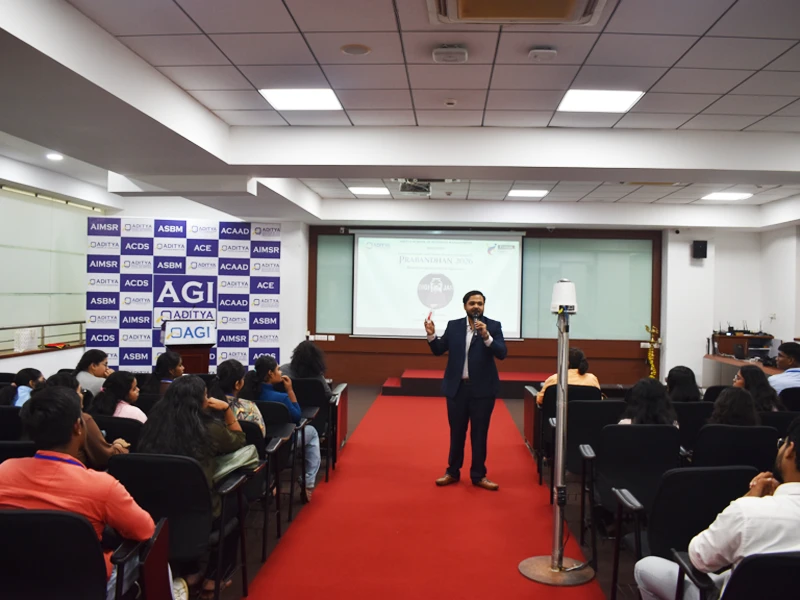
Day 4 introduced students to one of the most important learning methods in management education—case-based learning.
The first session focused on the importance of case studies in Business Management and how real-world situations can be used to develop managerial thinking.
The session was conducted by Prof. Kuheli Pulyadath, Case Study Facilitator, Simulation Trainer and Experiential Learning Expert. Her profile highlights extensive experience across industry and academia and expertise in case-method teaching, business simulations and experiential learning.
Students were encouraged to understand that case studies do not always have one correct answer. Instead, they require students to:
- Understand the situation
- Identify the problem
- Analyse available information
- Consider alternatives
- Make decisions
- Defend their recommendations
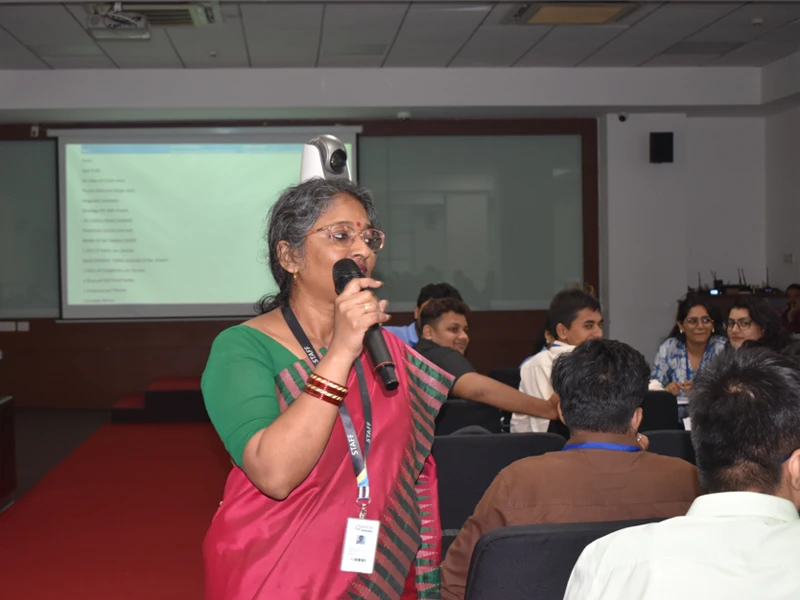
Tata Nano Case Study
The second session turned this concept into an interactive group exercise.
Students were divided into groups and given the Tata Nano case.
They were asked to discuss an important question:
Should the Tata Nano be reborn with new innovation in the form of a Tata Nano EV?
Each group had to consider the idea from different perspectives and decide whether the concept should be revived.
The discussion required students to think about innovation, market demand, consumer expectations, business feasibility and strategic positioning.
Students exchanged ideas, disagreed with one another, defended their views and learned to appreciate different perspectives.
Learning from Day 4
The Tata Nano activity showed students that a manager often has to make decisions when there is no single obvious answer.
The day developed critical thinking, strategic analysis, communication, teamwork and decision-making.
DAY 5
LEARNING THROUGH CINEMA – THE ANGRY MAN
Facilitators: Prof. Neha Bhatia and Prof. Vritte Parekh
Day 5 brought a different style of learning through movie-based experiential learning.
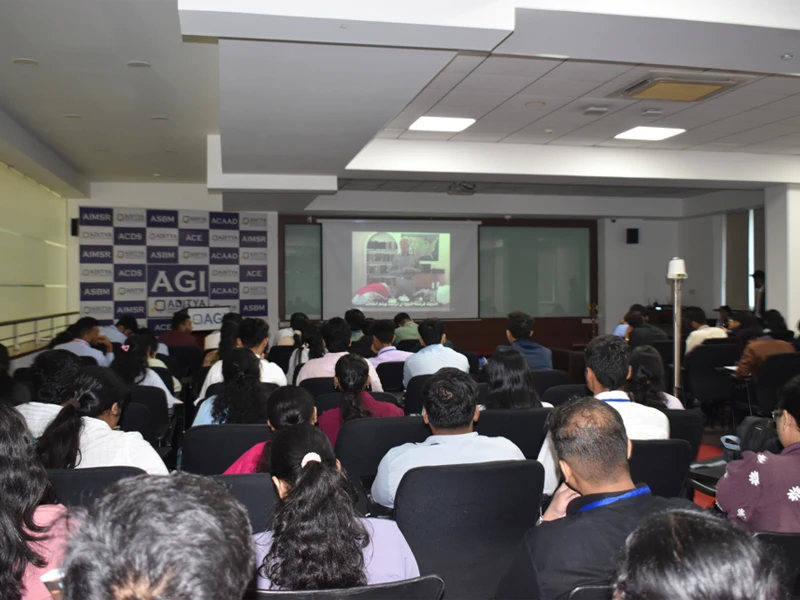
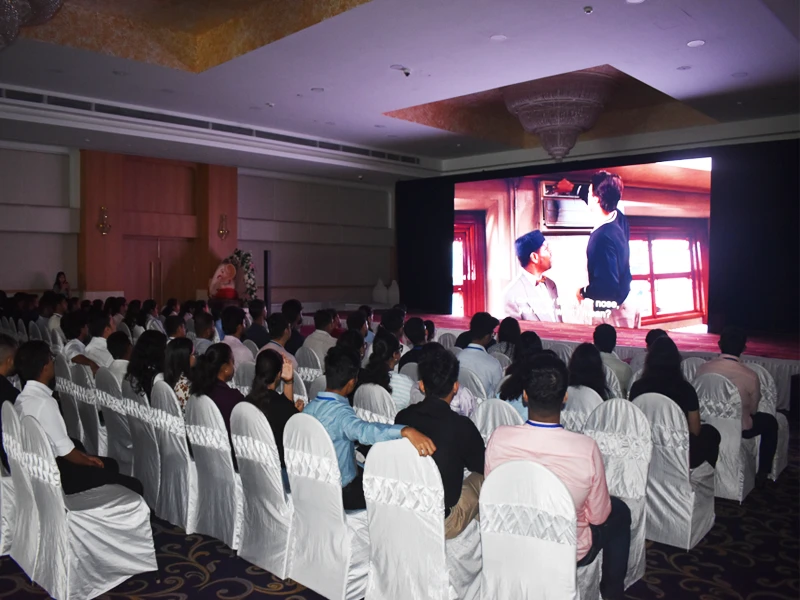
The students watched the movie The Angry Man under the guidance of Prof. Neha Bhatia and Prof. Vritte Parekh.
The movie screening was followed by a discussion on the learnings and qualities reflected in the movie.
Instead of ending the session with a conventional discussion, the faculty converted the learning into an activity.
Enactment Activity
Students were divided into groups.
Each group had to enact a particular quality from the movie, but there was an interesting condition—they could use only actions and gestures.
The other students had to observe the performance and guess the quality being enacted.
This simple activity encouraged students to understand the importance of:
- Non-verbal communication
- Observation
- Creativity
- Confidence
- Teamwork
- Interpretation
- Understanding human behaviour
The activity also created an enjoyable environment where students could participate without the pressure of a conventional classroom.
Learning from Day 5
The day showed students that management learning can happen through stories, characters, emotions, observation and human behaviour.It also reminded them that a manager must understand people, not just processes.
DAY 6
CELEBRATION, INSTITUTIONAL VALUES & FOREIGN LANGUAGE LEARNING
Hosts: Ms. Raksha Panchariya and Ms. Jhanvi
Day 6 was a special day because it combined celebration, institutional values and global learning.
75th Birthday Celebration of Dr. Harishchandra S Mishra
The first session was dedicated to celebrating the 75th birthday of Dr. Harishchandra S Mishra, Founder and Trustee.
The occasion brought students together in a warm and celebratory atmosphere.
A special performance was presented by students from the NGO, adding an emotional and meaningful dimension to the celebration.
The celebration gave the new batch an opportunity to experience the institution as more than just a place of academics. It reflected a sense of community, respect, gratitude and togetherness.
Session on Spanish Language
The second session introduced students to the Spanish language.
The session was conducted by Dr. Satish Ailawadi, an industry veteran, professor and author with expertise in Supply Chain Management. The Day 6 presentation identifies the session as Foreign Language – Spanish.
The session gave students exposure to a language and culture outside their regular management curriculum.
Learning from Day 6
Students understood that becoming a management professional also involves developing global awareness, cultural sensitivity and the willingness to learn beyond one’s immediate academic discipline.
DAY 7
MS EXCEL, TECHNICAL SKILLS & PSYCHOMETRIC SELF-DISCOVERY
Hosts: Ms. Harshada Nar and Ms. Ramsha Khan
Day 7 focused on two important aspects of professional development—technical competence and self-awareness.
Session 1 – MS Excel Training
The first session was conducted by Mr. Suhas Worlikar, Senior Faculty, Financial Market Expert and Management Trainer. The session focused on MS Excel Training.
Mr. Worlikar brings more than 15 years of experience in financial markets, corporate valuation, financial modelling and investment analysis. He has also delivered extensive training to students, professionals and executives.
The session introduced students to the importance of Excel as a practical professional tool.
For management students, Excel is not merely software; it can support:
- Data analysis
- Financial calculations
- Reporting
- Decision-making
- Business modelling
- Presentations and analysis
Session 2 – Psychometric Test & Result-Based Guidance
The second session was conducted by Prof. Neha Bhatia, Assistant Professor – HRM and HR Expert.
The Psychometric Test and Result-Based Guidance session gave students an opportunity to understand themselves better.
Students reflected on their personality, behavioural tendencies, strengths and areas that could be developed further.
The session encouraged students to think about how their personal characteristics could influence their academic journey, career choices and interactions with others.
Learning from Day 7
Day 7 created an important balance between “knowing the tool” and “knowing yourself.”Students understood that professional success requires bot technical capability and self-awareness.
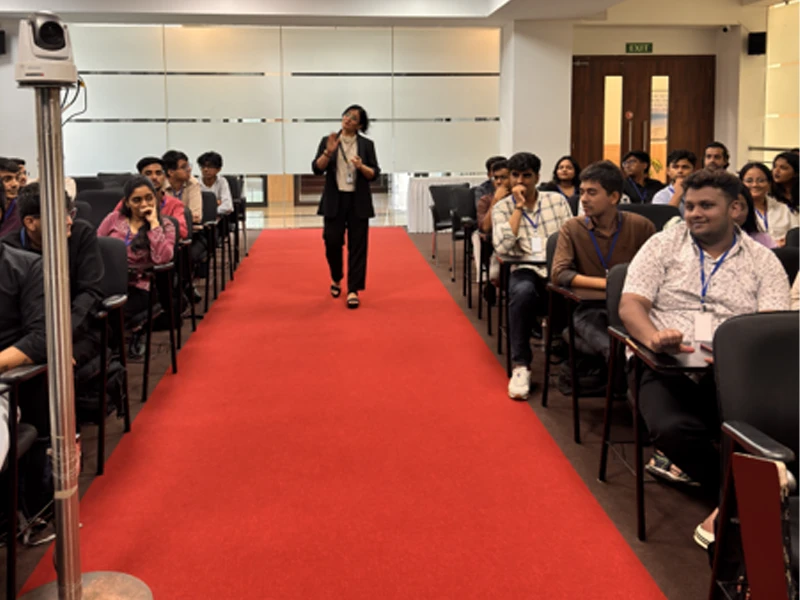
DAY 8
BUSINESS MANAGEMENT, ARTIFICIAL INTELLIGENCE & GEN Z LEADERSHIP
Hosts: Mr. Rohit Deshmukh and Ms. Yaadvi Rawal
Day 8 consisted of three sessions that exposed students to the current business environment, emerging technology and the leadership potential of their generation.
Session 1 – Current Business Management Environment in India
The first session was conducted by Mr. Pankaj Shukla, Corporate Trainer, on “Current Business Management Environment in India.”
Mr. Shukla brings a remarkable professional background with 40 years of experience, including 30 years in corporate leadership and 10 years in higher education.
His experience spans organisations and sectors including FMCG, pharmaceuticals, OTC and industrial businesses.
The session gave students a practical perspective on how the Indian business environment operates and how organisations need to continuously adapt.
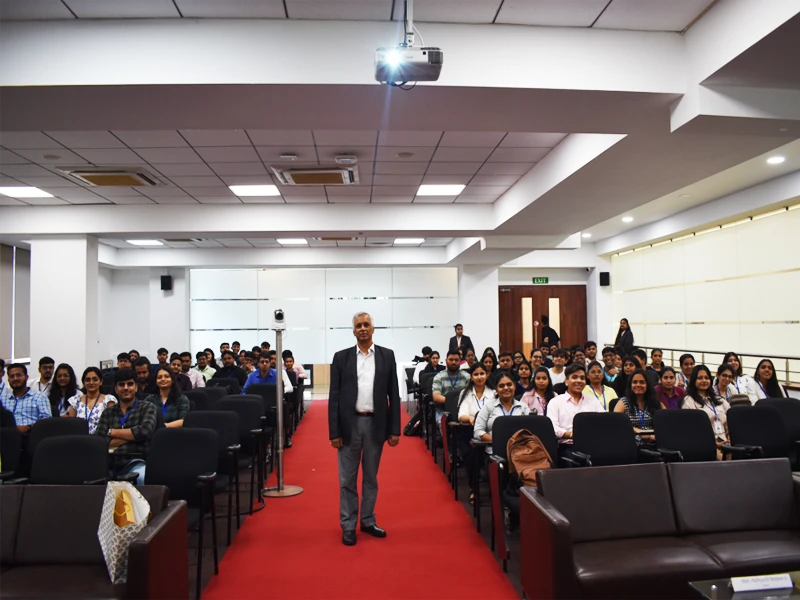
Session 2 – Impact of AI on Business
The second session was conducted by Mr. Siddheshwar Rajadhyax, Marketing Technology Consultant, on the “Impact of AI on Business.”
The session focused on how Artificial Intelligence is becoming an important part of modern business.
Students were encouraged to understand AI not simply as a technological concept but as something that can influence business growth, marketing, decision-making, innovation and customer engagement.
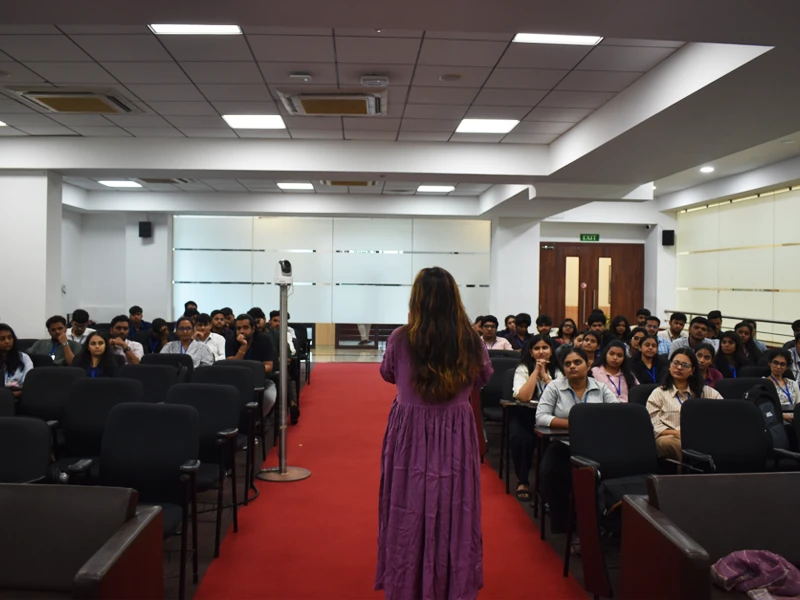
Session 3 – Gen Z Business Leadership
The third session was conducted by Ms. Monisha Bohra, Content Strategist and Brand Communications Professional, on “Gen Z Business Leadership.”
As a young professional with experience across finance, retail, insurance, telecom, education and technology, Ms. Bohra brought a perspective that was particularly relevant to the students.
The session encouraged students to understand the strengths of Gen Z in the workplace, including digital awareness, creativity, fresh thinking and the ability to adapt to changing communication and business environments.
Learning from Day 8
Day 8 helped students understand that the future manager will need to combine:Business knowledge + Technology + Adaptability + Leadershi
DAY 9
PLACEMENT ORIENTATION, LIBRARY, DIGITAL LEARNING & MANAGEMENT GAME
Host: Ms. Isha Mhatre
Day 9 was highly practical and focused on resources and systems that would directly support students during their PGDM journey.
Session 1 – Placement Cell Orientation
The first session was conducted by Ms. Avni Raichura, Head – Corporate Relations & Placements, and Ms. Soni Singh, Manager – Corporate Relations & Placements.
Ms. Avni Raichura has experience in placement initiatives, industry outreach and career development, while Ms. Soni Singh brings experience in corporate relations, placement management, skill-enhancement programmes and career readiness.
The session introduced students to the Placement Cell and its functioning.
Students were explained the importance of beginning career preparation from the very start of their PGDM rather than waiting until the final year.
The concepts of exponential growth and the SPARK term were also explained in detail.
The message was clear: small and consistent efforts, when continued over time, can create significant professional growth.
Session 2 – Library Orientation & Book Review
The second session was the Library Orientation, conducted by Ms. Samidha Jadhav and Ms. Diksha Ghandat.
Students were introduced to the importance and use of the library as a source of academic knowledge, reference material and independent learning.
The library session was followed by a book review by Mr. Omkarkumar Gupta on Siddhartha by Hermann Hesse.
The discussion focused on the journey of self-discovery and the search for meaning.
The review encouraged students to think about the difference between simply achieving external success and understanding one’s own purpose, values and inner growth.
Session 3 – TCS iON Training
The third session was conducted by Prof. Ramakrishnan Iyer, Assistant Professor – MCA and ERP Head, on TCS iON Training – ERP and LMS.
Students were introduced to:
- How TCS iON works
- How to access their results
- How the application functions
- The role of digital academic systems
Prof. Iyer’s extensive experience in IT, automation, RPA, chatbots and machine learning brought a practical technology perspective to the session.
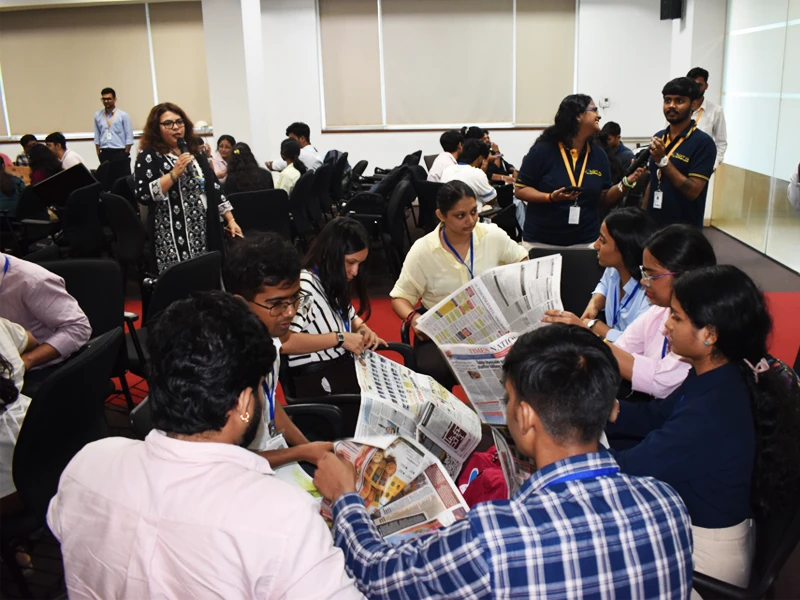
Management Game – Newspaper Rope & Blindfolded Square
The day also featured an engaging management activity conducted by Dr. Sanchita Banerji, Professor – Human Resource Management.
Students were divided into groups and given newspapers.
Their first challenge was to create a two-metre-long rope from the newspaper within 10 minutes, without using anything else.
There was no glue, no stapler and no additional material allowed.
The challenge immediately required creativity, planning and cooperation.
But the second part was even more interesting.
The students were blindfolded and asked to use the rope they had created to form a square on the ground.
Without being able to see, students had to depend on:
- Trust
- Communication
- Listening
- Leadership
- Coordination
- Patience
- Teamwork
The group that created the bigger square performed better.Learning from Day 9
The activity demonstrated that when individuals cannot depend on themselves alone, they have to trust the people around them.It became a powerful practical lesson in team trust, communication and collective problem-solving.
DAY 10
STUDENT COUNCIL, CRs, CLUBS, FACULTY INTERACTION & CORPORATE EXPECTATIONS
Hosts: Mr. Zeel Shah and Ms. Raksha Panchariya
Day 10 focused on the internal student ecosystem of the institute and then connected it with the expectations of the corporate world.
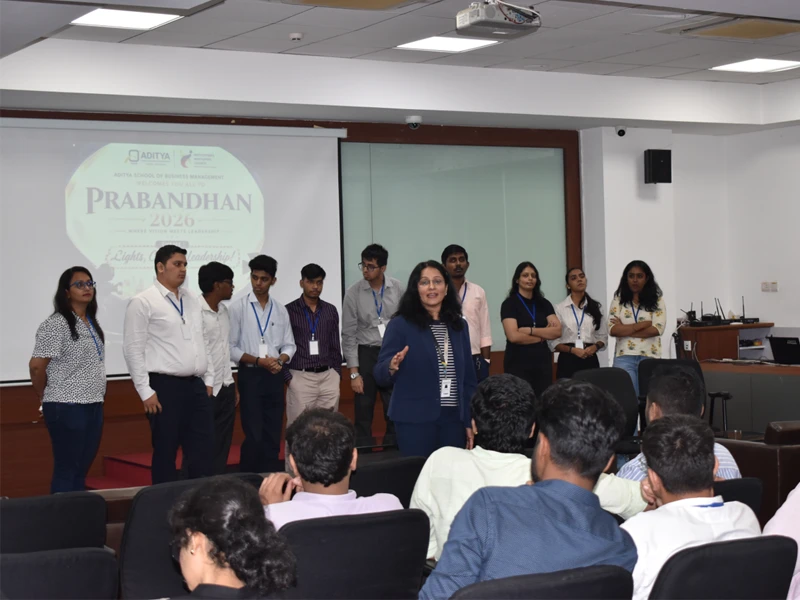
Session 1 – Introduction to the Student Council
The first session introduced the students to the Student Council.
The students were explained:
- How the Student Council functions
- The different roles within the council
- Responsibilities of student representatives
- The importance of student leadership
- How the council acts as a bridge between students and the institution
The session helped students understand that leadership is not simply about having a title.
It is about taking responsibility, representing others, communicating effectively, coordinating activities and contributing to the larger student community.
Introduction of Main CRs
Following the Student Council orientation, the Main Class Representatives (CRs) were introduced.
The students were also introduced to the points of contact for each specialisation, helping establish a clear communication structure within the batch.
This gave students clarity about whom they could approach for academic, administrative and batch-related communication.
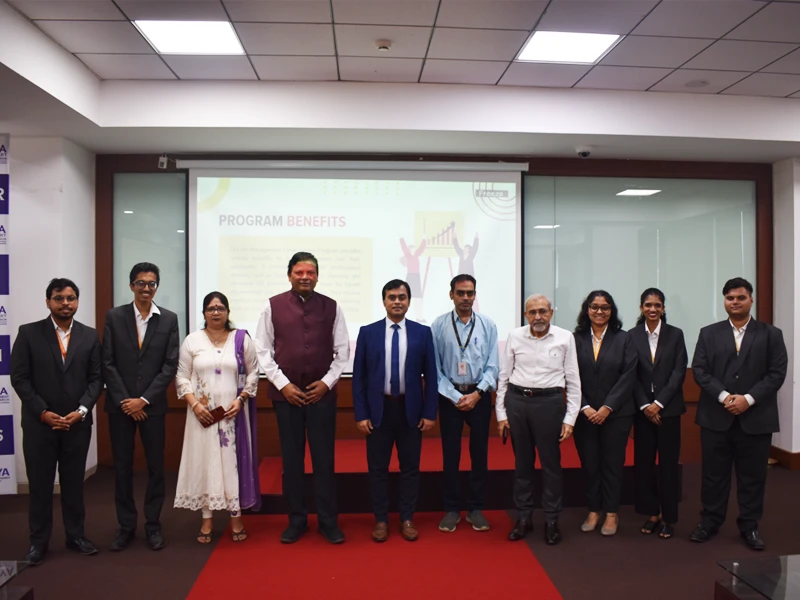
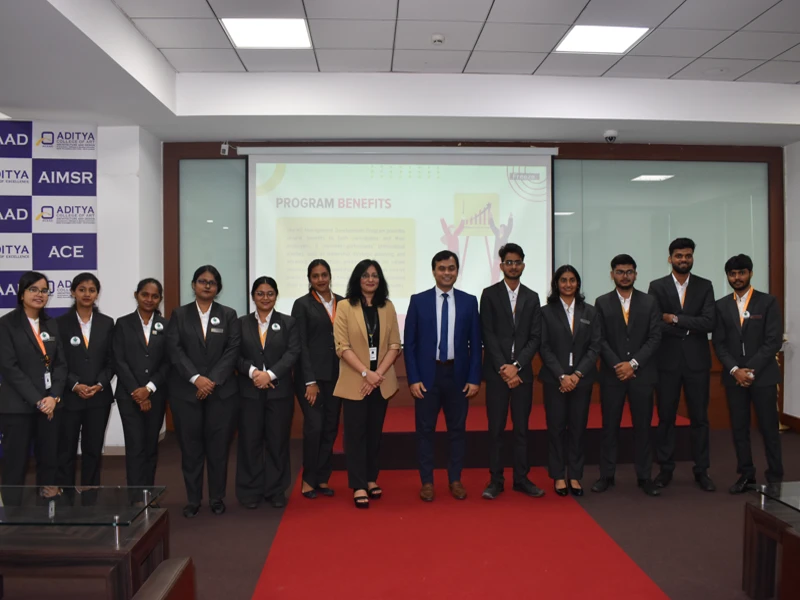
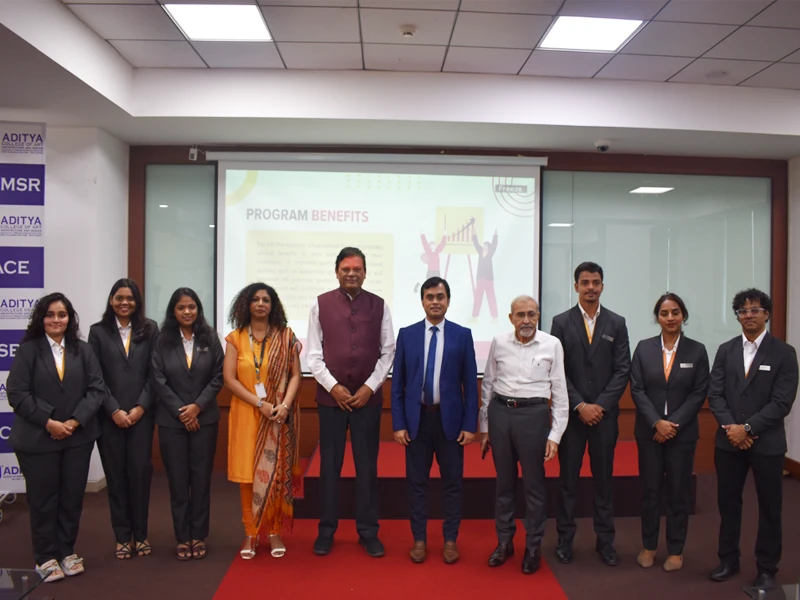
Introduction to Student Clubs
The students were introduced to the:
Finance Club
A platform for students interested in finance, markets, investments and financial concepts to explore their interests through practical activities.
HR Club
A platform for understanding people, organisational behaviour, human resources and leadership through student-led activities.
Marketing Club
A platform for students interested in branding, communication, consumer behaviour, creativity and marketing.
The students were explained why clubs play a vital role in management education.
Clubs allow students to:
- Apply classroom knowledge
- Organise activities
- Work in teams
- Take initiative
- Develop leadership
- Explore specialisations
- Build confidence
- Gain practical exposure
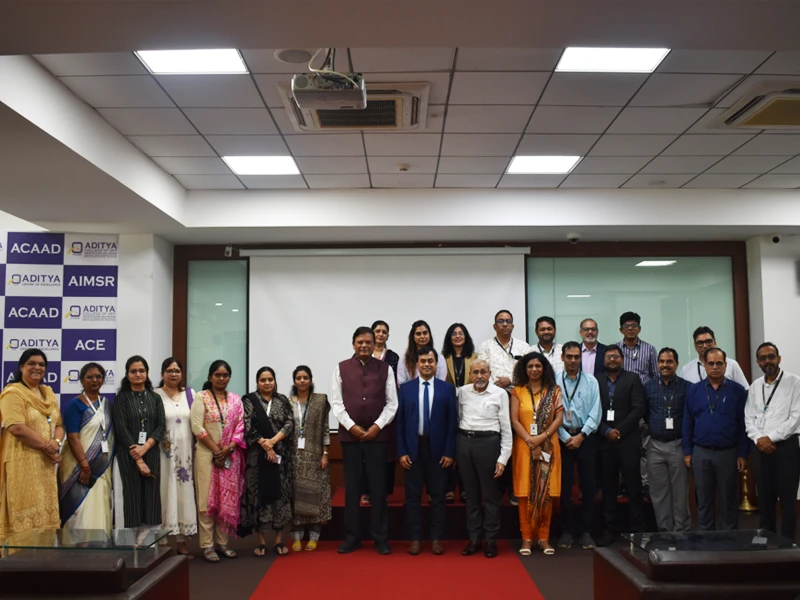
Faculty Introduction
The first session also included the introduction of the faculty members.
Each faculty member briefly introduced themselves and shared an insightful piece of knowledge with the students.
This gave the students an opportunity to understand the diverse experience and expertise available within the institution.
More importantly, it created an initial connection between the faculty and students and helped make the new academic environment feel more familiar.
SESSION 2 – WHAT REALLY DOES THE CORPORATE WORLD EXPECT FROM MBAs?
The second session featured Mr. Kunal Prabhu, Entrepreneur and Founder – The Digital Warehouse, on the topic “Corporate Expectations from MBAs & Sales.”
Mr. Prabhu brings over eight years of experience across real estate, digital marketing, hospitality and event management. He has worked with Property Pistol’s Dubai branch, contributed to property sales exceeding ₹70 crore in 18 months, is a Partner at The Alpha Prop Realty, Founder of The Digital Warehouse and Partner at Alpha Prime Hospitality & Management.
His session gave students a practical answer to an important question:
What does the corporate world actually expect from an MBA?
The discussion made students understand that an MBA degree by itself is not enough.
Companies also look for professionals who can:
- Communicate effectively
- Understand customers
- Solve problems
- Take initiative
- Build relationships
- Work under pressure
- Adapt to changing situations
- Contribute to business growth
Understanding Sales
A major part of the session was dedicated to Sales.
Students were encouraged to understand that sales is much more than convincing someone to purchase a product.
Sales involves:
Understanding → Listening → Identifying Needs → Creating Value → Communicating → Building Relationships → Closing
Sales plays a vital role in every organisation because it connects the business with its customers and contributes directly to revenue and growth.
The session also highlighted why understanding sales is valuable even for students who may not choose sales as their final career path.
Sales develops communication, confidence, negotiation, persuasion, resilience, relationship management and customer understanding.
Mr. Prabhu’s own entrepreneurial journey made these lessons particularly relatable because students could connect the discussion to real experiences of business building and growth.
Learning from Day 10
Students understood that an MBA professional is expected not only to know, but also to perform, communicate, adapt and create value.
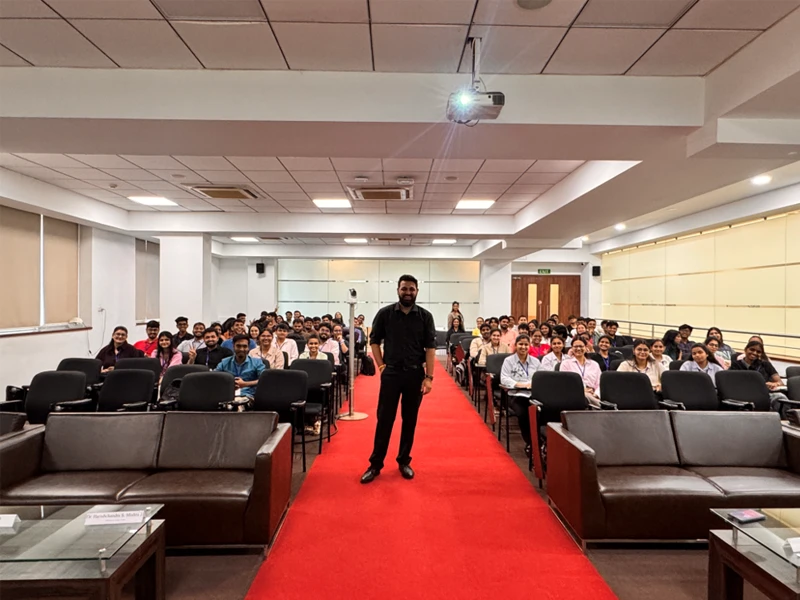
DAY 11
OUTBOUND ACTIVITY AT JUICE ADVENTURE
TEAMWORK, LEADERSHIP, STRATEGY & LEARNING THROUGH EXPERIENCE
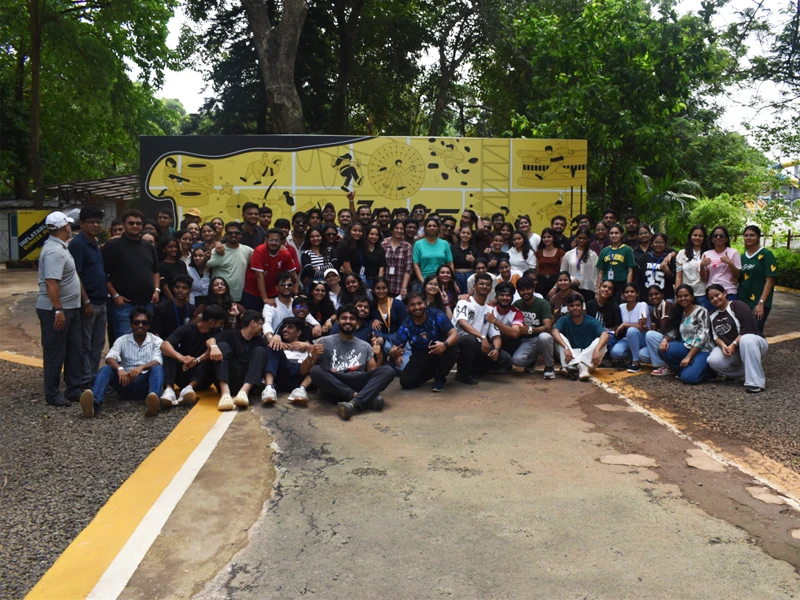
After ten days of classroom-based sessions, expert interactions and management activities, Day 11 took the students outside the classroom for an outbound activity at Juice Adventure.
The day provided a completely different learning environment.
Students were divided into four teams:
- 🟡 Golden
- ⚪ Silver
- 🔴 Red
- 🟣 Purple
Each group had a team leader who was responsible for coordinating the members, motivating the team and helping the group approach the various challenges strategically.
The day was filled with excitement, healthy competition, laughter and, most importantly, teamwork.
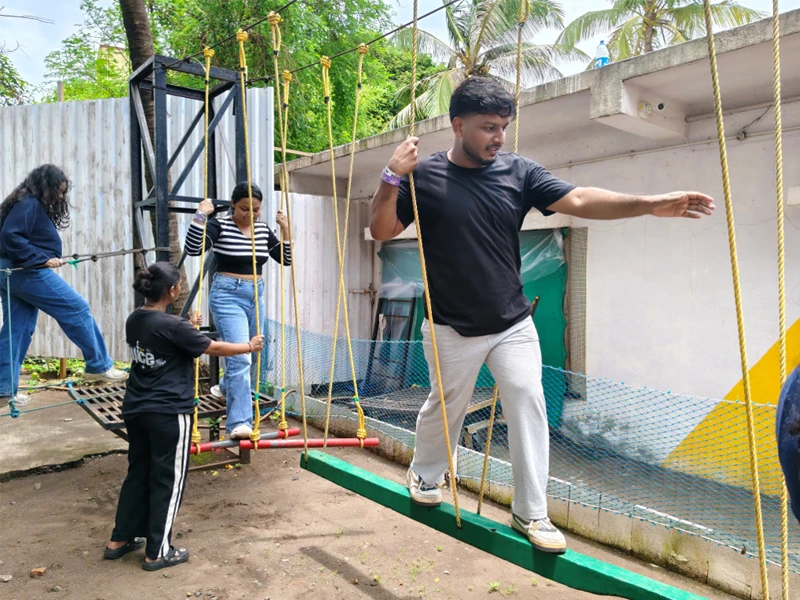
Tree Top Activity
The Tree Top activity challenged students physically and mentally.
Students had to overcome obstacles and move through the activity while trusting themselves and supporting their teammates.
The experience encouraged:
- Courage
- Confidence
- Trust
- Risk management
- Mutual support
It showed students that stepping outside their comfort zone can often lead to the greatest learning.
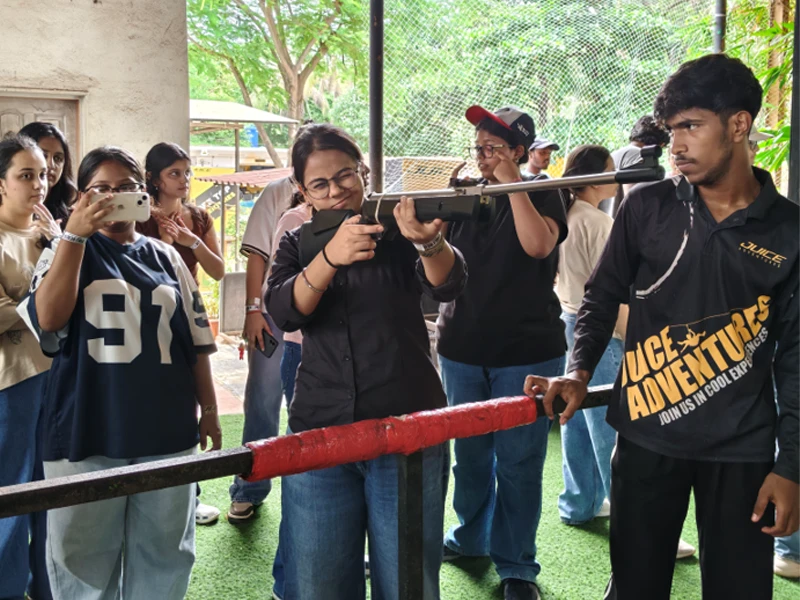
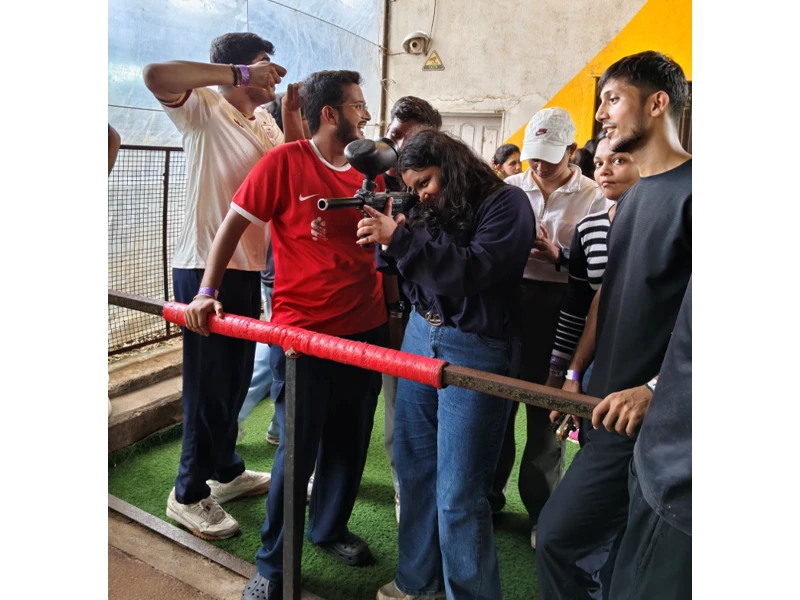
Rifle Shooting
The rifle shooting activity required concentration, patience and precision.
Students had to remain calm and focused before taking their shots.
The activity demonstrated that in both business and life, acting without concentration can lead to mistakes. Sometimes the best decision comes from pausing, focusing and then acting.
Paintball Shooting
The paintball activity brought strategy and teamwork into the competition.
Students had to communicate with their team members, plan their approach and respond quickly to the actions of the opposing team.
It highlighted the importance of:
- Strategy
- Team coordination
- Communication
- Situational awareness
- Quick decision-making
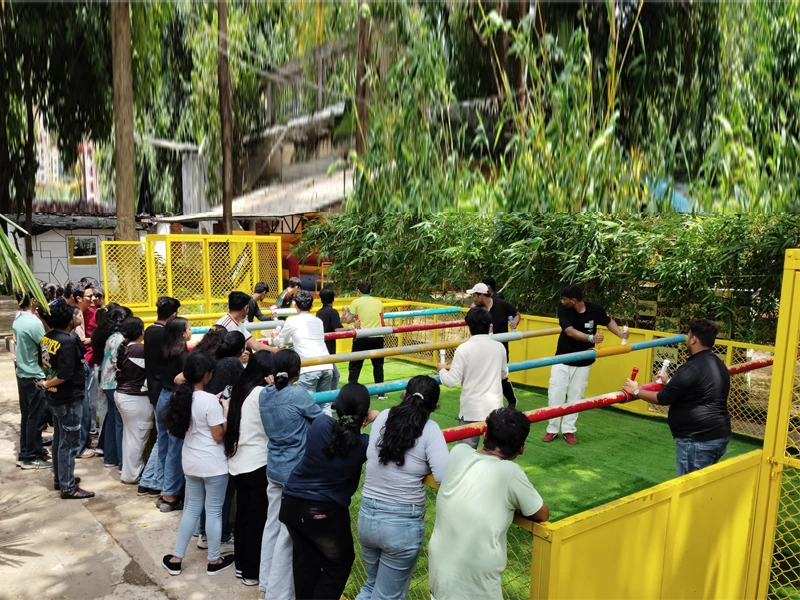
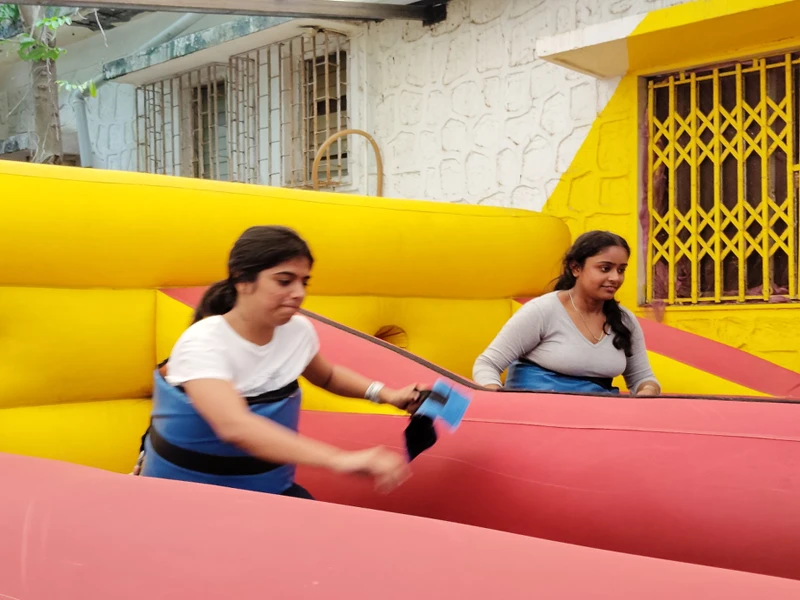
Human Foosball
The human version of foosball turned a familiar game into a highly interactive team challenge.
Students could not function independently. They had to coordinate their movements with their teammates.
The activity demonstrated that when one person moves without considering the rest of the team, the entire team can lose coordination.
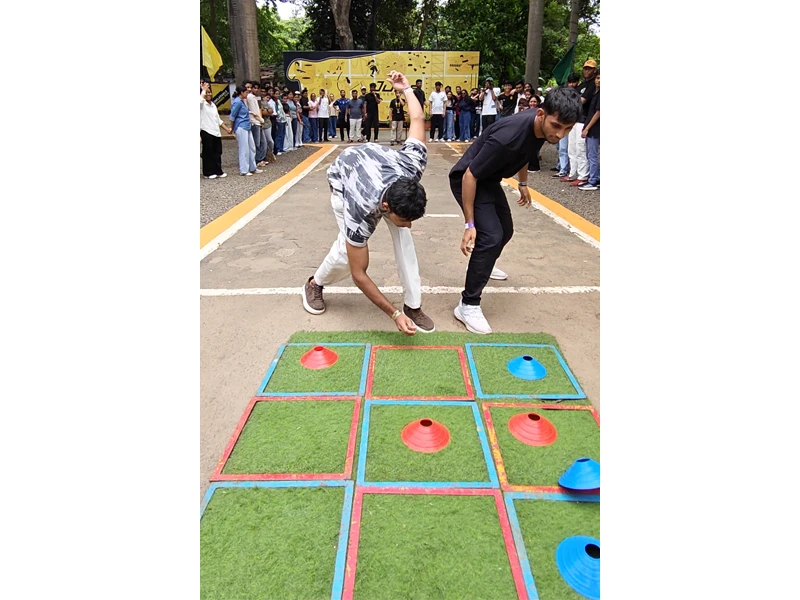
Slow-Run Tic-Tac-Toe
The slow-run Tic-Tac-Toe activity combined physical movement with strategic thinking.
Students had to control their pace while simultaneously thinking about their next move.
The activity showed that success is not always about being the fastest. Sometimes patience, planning and choosing the right move at the right moment can make the difference.
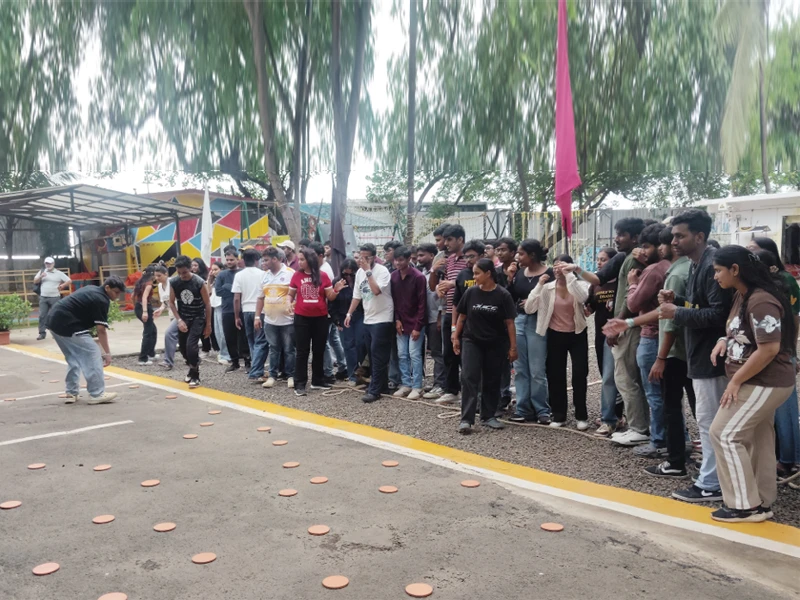
Mind Test Game
The mind test game challenged students to think quickly and remain mentally alert.
It tested their ability to process information, stay focused and make decisions under pressure.
The activity demonstrated the importance of mental agility, concentration, problem-solving and adaptability.
Tug of War
The day also included the classic Tug of War, which brought out the strongest team spirit among the students.
The activity made one lesson particularly clear:
Individual strength becomes powerful only when it is combined with collective effort.
Every member had to pull together, maintain coordination and remain committed to the team’s objective.
The activity strengthened the sense of unity among the students and created an atmosphere of healthy competition.
LEARNING FROM DAY 11
The outbound activity demonstrated the concept of learning by doing.
Students experienced leadership instead of simply discussing it.
They experienced teamwork instead of merely hearing about it.
They experienced strategy instead of simply studying it.
They experienced trust instead of simply defining it.
The day also allowed students to interact with classmates in a completely different environment, strengthening friendships and creating memories that would remain a part of their PGDM journey.
OVERALL LEARNING JOURNEY OF PRABANDHAN 2026
The eleven days of Prabandhan followed a natural progression.
| Day |
Major Theme |
Major Learning |
| Day 1 | Inauguration & Industry Exposure | Leadership & Professional Outlook |
| Day 2 | Communication & Team Building | Communication, Trust & Time Management |
| Day 3 | FinTech & Entrepreneurship | Innovation & Digital Thinking |
| Day 4 | Case Studies | Critical Thinking & Decision-Making |
| Day 5 | Movie-Based Learning | Human Behaviour & Non-Verbal Communication |
| Day 6 | Celebration & Spanish | Community & Global Exposure |
| Day 7 | Excel & Psychometric Test | Technical Skills & Self-Awareness |
| Day 8 | Business, AI & Gen Z Leadership | Future Readiness |
| Day 9 | Placements, Library & TCS iON | Career Preparation & Digital Learning |
| Day 10 | Student Council, Clubs & Corporate Expectations | Leadership & Employability |
| Day 11 | Outbound Activity | Teamwork, Strategy & Trust |
THE HUMAN SIDE OF PRABANDHAN 2026
What made Prabandhan 2026 truly special was not just the number of sessions or the number of speakers.
It was the journey the students went through together.
On the first day, many students were meeting each other for the first time. They entered the programme as individuals, still getting familiar with the campus, faculty and their classmates.
Then came the balloon activity, where they had to depend on one another.
The case study encouraged them to debate and express their opinions.
The movie activity allowed them to laugh, perform and understand one another.
The psychometric session encouraged them to look inward.
The blindfolded square activity taught them to trust their teammates even when they could not see.
The Student Council and club orientation showed them that they could contribute to the institute rather than simply attend it.
The corporate session reminded them that their MBA journey would ultimately have to translate into real professional value.
And finally, Juice Adventure brought the entire batch together through competition, challenges and teamwork.
In many ways, the eleven days reflected the actual journey of a management professional:
You listen.
You learn.
You make mistakes.
You adapt.
You work with people.
You take responsibility.
You build trust.
You lead.
OVERALL IMPACT
Prabandhan 2026 successfully exposed students to multiple dimensions of management education:
Academic & Analytical Learning
- Case studies
- Strategic thinking
- Decision-making
- Business management
- FinTech
Professional Development
- Business communication
- Interpersonal skills
- Corporate expectations
- Sales
- Placement orientation
- Technical skills
Technology & Future Readiness
- Artificial Intelligence
- TCS iON
- ERP and LMS
- MS Excel
- Digital business
- Gen Z leadership
Personal Development
- Psychometric assessment
- Self-awareness
- Confidence
- Communication
- Creativity
- Foreign language learning
Leadership & Teamwork
- Student Council
- Class Representatives
- Student Clubs
- Balloon and cup activity
- Newspaper challenge
- Blindfolded square
- Outdoor team challenges
Industry & Corporate Exposure
Students interacted with professionals and leaders from areas including:
Risk Management • Venture Capital • AI • Marketing • FinTech • HR • Dairy & Cooperatives • Entrepreneurship • Digital Marketing • Business Management • Technology • Placements • Sales
This diverse exposure helped students understand that the world of management is broad and interconnected.
CONCLUSION
Prabandhan 2026 was not merely an orientation programme. It was the first chapter of the professional journey of the PGDM Batch 2026–28.
Over eleven days, students were introduced to their institute, faculty, classmates, industry professionals, alumni, student leadership structures, clubs, technology platforms and the expectations of the corporate world.
They learned that management is not restricted to theories and presentations.
It is about people.
It is about communication.
It is about decisions.
It is about trust.
It is about taking responsibility.
It is about working with others.
And ultimately, it is about creating value.
From the lighting of the lamp on Day 1 to the team challenges at Juice Adventure on Day 11, every stage of Prabandhan added a different piece to the students’ understanding of management.
The programme began with students listening to leaders and ended with students becoming leaders within their teams.
It began with introductions and ended with stronger friendships.
It began with individual students and ended with a more connected batch.
Most importantly, Prabandhan 2026 gave the students something that cannot be taught entirely through textbooks—a collection of experiences, interactions, challenges, lessons and memories that will form the foundation of their PGDM journey.